
01
Broadcast & Live Events
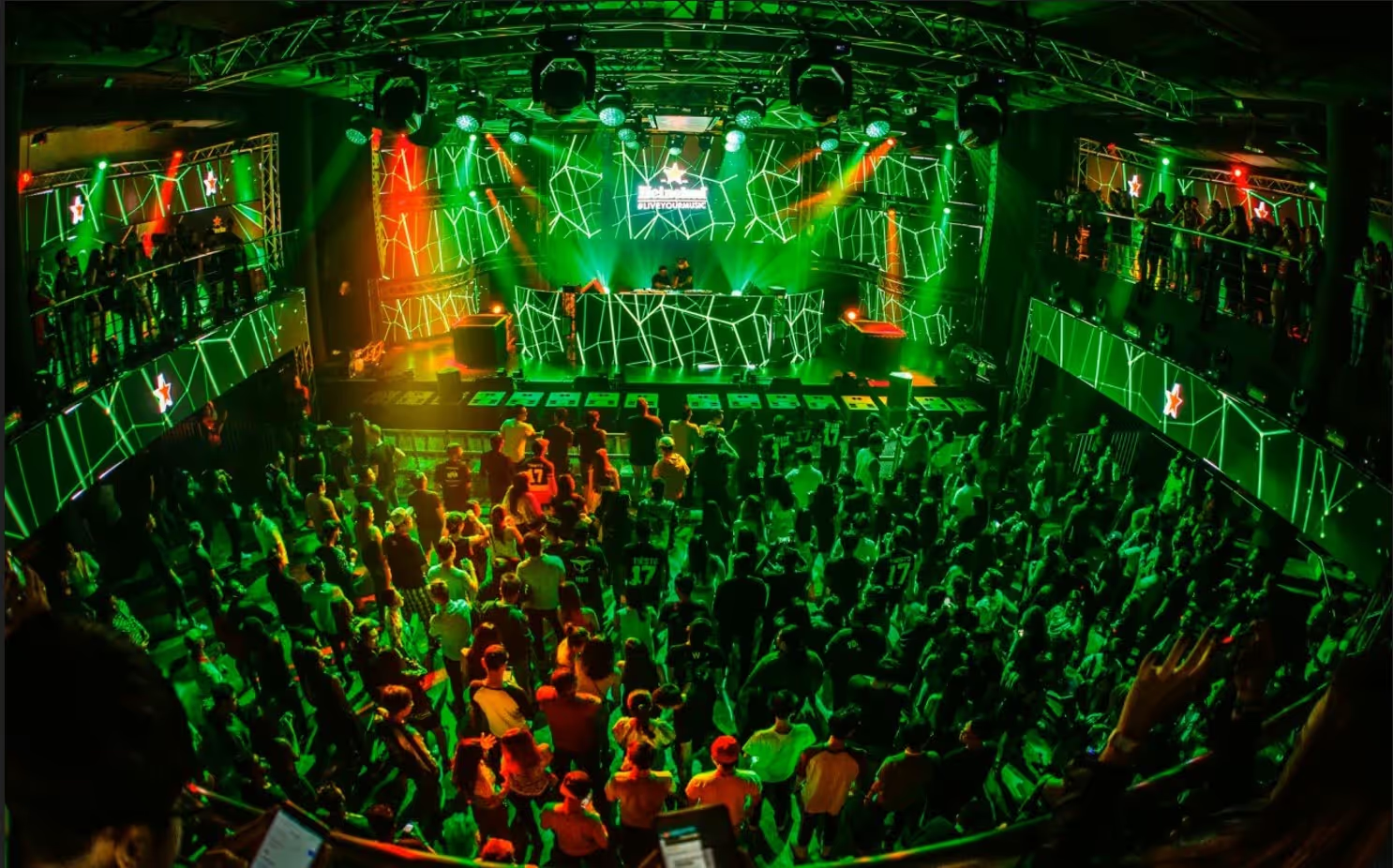
Camera-to-LED consistency on shows with no second take.
 Red Rock OPS × Analog Way · LUT Workflow
Analog Way LivePremier is the only presentation switcher line with two independent 3D LUT slots on every input and every output. Red Rock OPS fills them: Calman-measured, probe-verified color from source to screen, and keeps it there, live.
Every LivePremier input and output carries two independent 3D LUT stages, one conversion, one correction, applied simultaneously in real time at 10/12-bit 4:4:4. Red Rock OPS generates the 33×33×33 LUTs in Calman Ultimate and writes them directly into the Aquilon and C Series slots.
Two ways to read this page: Overview keeps it in plain business terms; Technical Details rewrites every section with the full engineering detail. Switch anytime with the floating toggle at the bottom of the screen, your choice is remembered.
LivePremier™ Aquilon & C Series ·  Calman Ultimate · Pomfort LiveGrade
First principles
A LUT (lookup table) is a translation table for color. For every color a signal can contain, it stores the color the display should actually show. A 3D LUT does this across all three color channels at once, which lets it fix things simple controls never can: a green tint that only lives in the midtones, skin that goes orange at one brightness and gray at another. Load the right LUT into the right place in the chain and the picture is corrected everywhere, in real time, without touching the source.
A 3D LUT maps input RGB triplets to output RGB triplets across a lattice of nodes, 33×33×33 in this workflow, with tetrahedral interpolation between nodes. Unlike 1D LUTs or matrix corrections, a 3D LUT addresses cross-channel, non-linear errors: hue-dependent saturation drift, white point that shifts with luminance, gamut clipping behavior. Conversion LUTs remap between color spaces and transfer functions; correction LUTs invert a display's measured error against a target. Calman generates both from probe data.
An audio engineer doesn't fix a room with bass and treble knobs, they reach for a parametric EQ: pick the exact frequency, set how wide the correction reaches, and how much it cuts or boosts, without touching the rest of the mix. A 3D LUT is the same instrument for the picture. Every one of its 35,937 points is a band: it targets one exact color, the correction falls off across a controlled neighborhood, and everything outside it stays untouched. Bass and treble knobs are your switcher's brightness and contrast. A parametric EQ with thousands of bands, that's the LUT.
A parametric EQ gives you center frequency, Q and gain per band. A 33³ LUT gives the equivalent per color: the lattice node is the center 'frequency' (a specific RGB coordinate), tetrahedral interpolation defines the 'Q' (how the correction blends across neighboring colors), and the node's output offset is the 'gain'. With 35,937 independently addressable nodes, it is the difference between tone controls and surgical control of the whole transfer function, global gain/offset/gamma are the shelving filters; the LUT is the fully parametric rack.
In live production or XR volumes, that means your LED wall stays camera-accurate show after show. No recalibrating between takes, no drift between the look you signed off and the one on screen.
The rotating cube in the video is the LUT itself, shown as a 3D table: every point inside the cube is one color mapping. Watch it being manipulated in real time; once the desired look is achieved, the LUT is uploaded straight into the switcher slot.
Where this matters
Ten verticals where a drifting display is a liability, and a held calibration is a competitive edge.
Camera-to-LED consistency on shows with no second take.
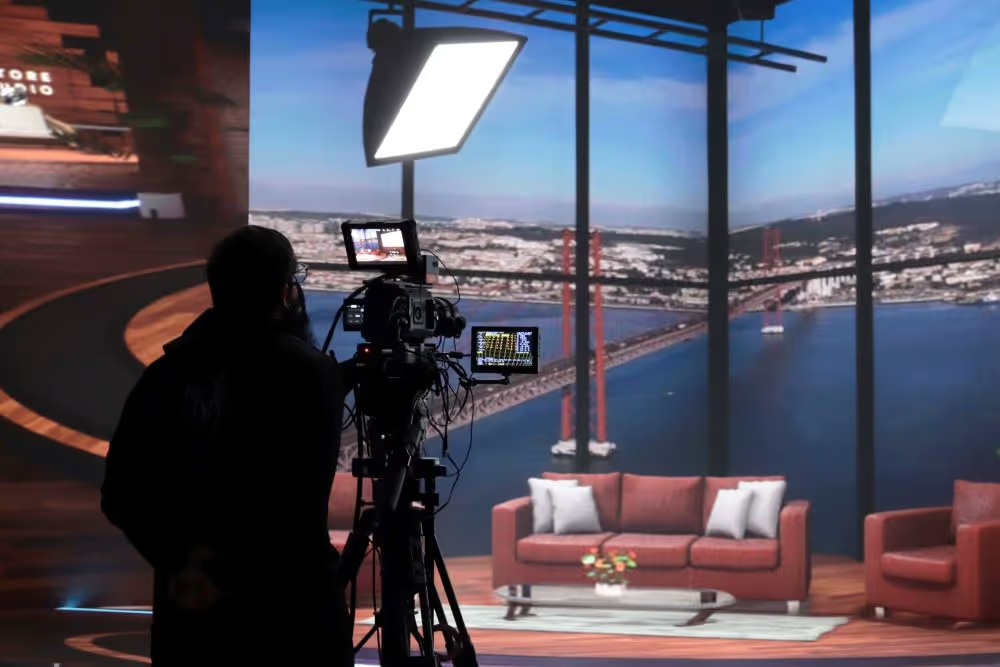
On-set displays that match the grade, reel after reel.
In-camera walls held to the camera's color science.
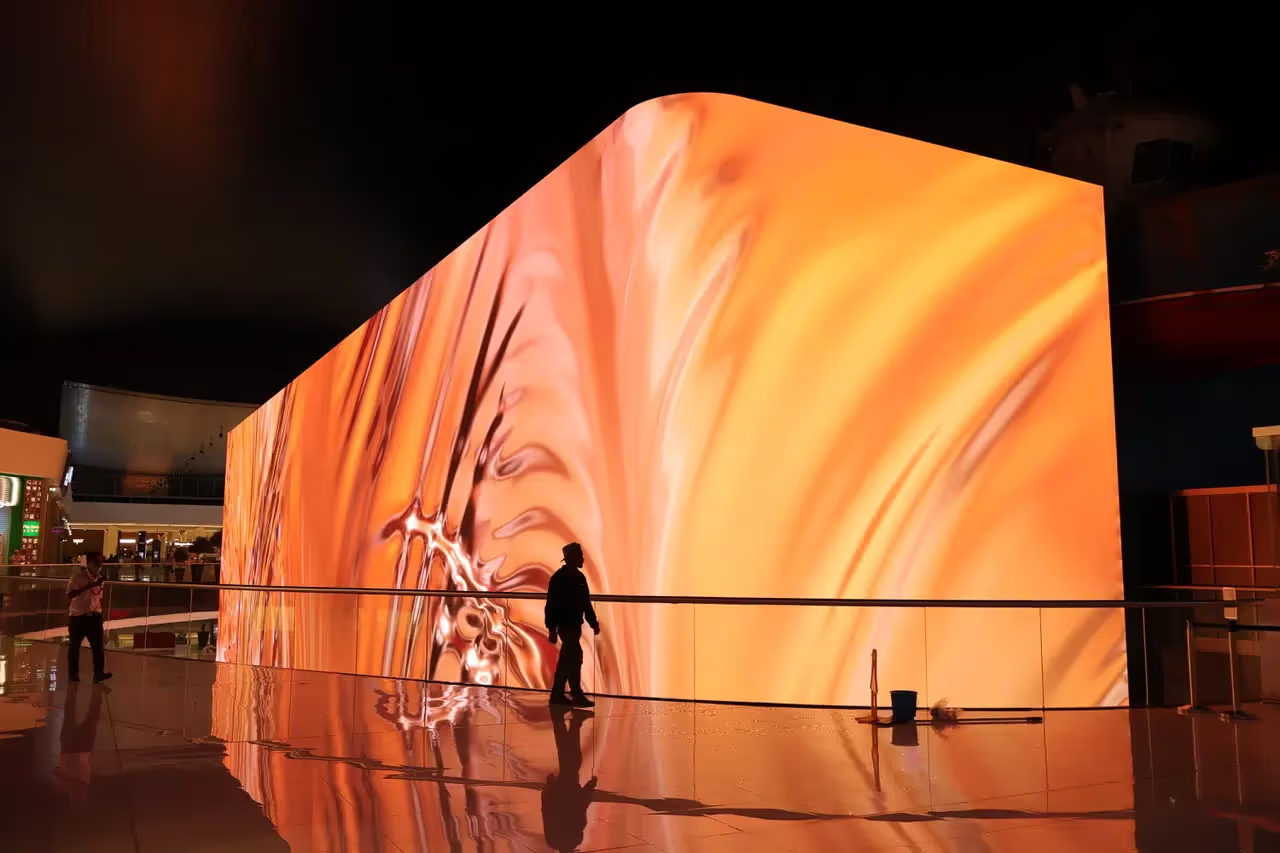
Multi-projector canvases that read as one.
Brand colors exact, across every screen in the fleet.
Boardroom walls that match the deck, not approximate it.
Review displays held to a measured, documented standard.
Terrain and sensor data rendered without color bias.
Control-room visualization where a false hue misleads.
Any pipeline where the number on the probe is the spec.
The unique solution
Most switchers give you one color adjustment, if any, and loading a creative look means losing your calibration. LivePremier gives every input and every output two independent 3D LUT slots: one to convert between color languages, one to correct the display. Both run at once. No other switcher in the industry has this architecture.
Each input and output path carries a conversion LUT stage (color space / dynamic range mapping, SDR↔HDR, Rec.709↔Rec.2020) and a separate correction LUT stage, applied simultaneously in real time. LUTs load as Adobe-spec .cube files into the unit's LUT library and are assigned per slot from the Web RCS, processing at 10/12-bit 4:4:4 with tetrahedral interpolation. Managed by the current 6th-generation LivePremier firmware.
Not an SDI LUT box · Aquilon & C Series
An SDI LUT box runs one channel through one LUT at a standard broadcast raster. A few convert SDI to HDMI or DP on the way out, but it's still one box, one path, one LUT. The LivePremier LUT engine lives inside the switcher, so it colors any input connector to any output connector, at any resolution the machine can build. If an Aquilon or C Series can create the format, the LUT paths can color it. No SDI LUT box in the industry can say that.
Dedicated SDI LUT processors operate on standard SMPTE rasters, SDI in and out, or at best a single-channel conversion to HDMI or DP, with one LUT stage per box. Because LivePremier's LUT stages sit inside the processing pipeline, they apply across every I/O type, 12G-SDI, HDMI 2.0, DisplayPort 1.2, IP, and at every raster the unit can generate, including fully custom output formats for LED walls and unconventional canvases. Format support is bounded by the switcher's output capability, not by a LUT box's raster table.
some models: HDMI or DP out, one channel, one LUT
Rasters it can color
Rasters it can color
Every input card routes to every output card through the same processing pipeline, and both 3D LUT stages ride along on every path. SDI in, HDMI out. DP in, IP out. Any combination, colored.
The modular backplane accepts any mix of 12G-SDI, HDMI 2.0, DP 1.2 and IP cards. Routing is a full crossbar: any input reaches any output at 4K60p 4:4:4, with both LUT stages applied per path, connector type never constrains the color pipeline.
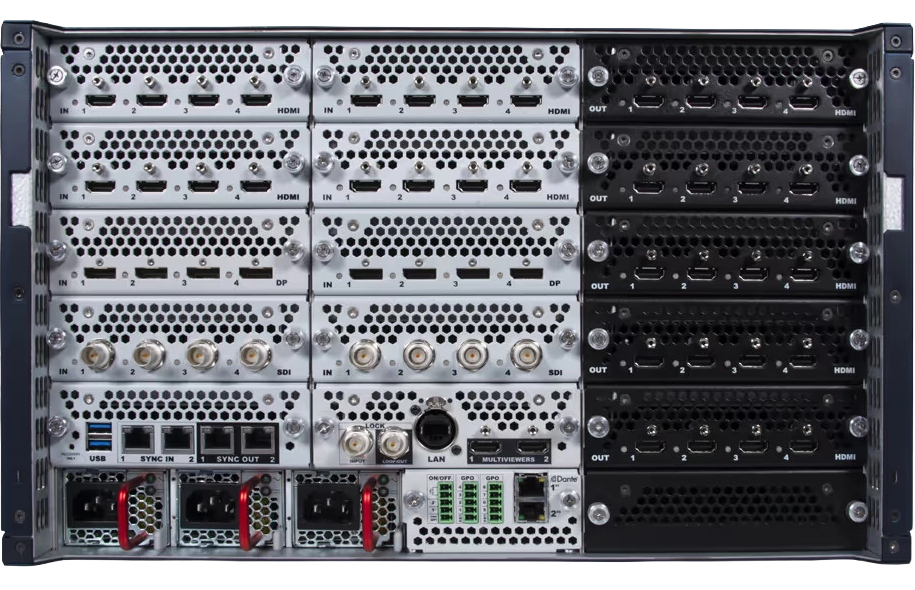
Aquilon and the C Series use exchangeable I/O cards. Mix SDI, HDMI, DisplayPort and IP in whatever ratio the application needs, a broadcast truck, an LED-heavy corporate stage, an IP-first studio, and change it when the next show is different. The two-slot LUT architecture rides on every card you fit.
Both platforms are card-based: input and output slots take interchangeable 12G-SDI, HDMI 2.0, DP 1.2 and IP modules, field-swappable to reconfigure the I/O mix per application. LUT stages are per-path in the frame, not per card type, any card fitted inherits the conversion + correction slots.
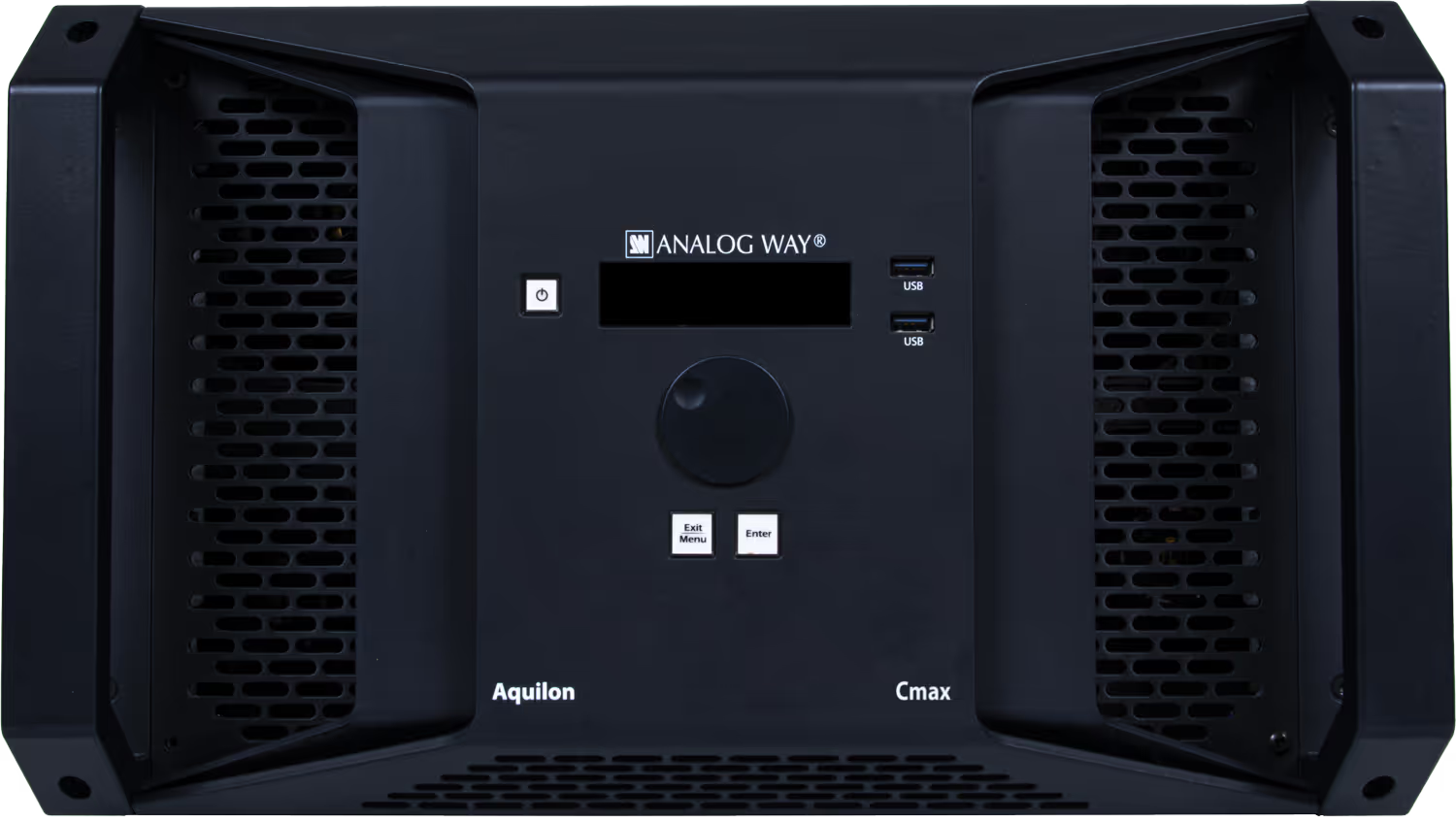
Aquilon RS6 rear panel · 32 × 4K60p in · 20 × 4K60p out · 6RU · © Analog Way
Aquilon Linking combines up to four units into a single system over 40G link connections, more inputs, more outputs, one canvas. Every linked path keeps the same two-slot LUT architecture, so the calibration scales with the show. And when linking isn't needed, the link card swaps for another output card.
Linking joins up to four mixed-capacity Aquilon and C Series frames over 40G QSFP link cards into one system. LUT slots remain per-I/O across the linked system, two 3D LUT stages on every input and output path. The Link Connector card is modular and can be replaced by any output card when linking isn't in use.
Aquilon and the C Series build custom rasters for LED walls and unconventional canvases every day. Every one of them runs through the same calibrated LUT paths, a capability no SDI LUT box in the industry offers.
Output rasters are limited only by the unit's format generator, custom timings included. The LUT stages sit downstream of raster generation, so any format the unit emits is colored. SDI LUT processors remain bounded by their SMPTE raster tables.
Nothing added
An external LUT box costs you twice: it adds frames of delay to a live show, and it adds one more thing that can fail at the worst moment. LivePremier's LUT stages are already inside the switcher, in a path your signal was taking anyway. Nothing is added: no delay, no extra box, no new point of failure. And because the LUTs process at the switcher's full bit depth, gradients stay smooth where 8-bit LUT boxes show banding.
External LUT processors add frames of latency and an additional failure point in the chain. LivePremier's LUT stages process inside the existing signal path at switcher bit depth: 10-bit processing, so no banding, versus the 8-bit LUTs of traditional SDI-only workflows. Zero added latency, zero added failure points, no extra rack space, cabling, or power.
(32 in + 20 out) × 2 slots each. Linking frames adds more.
Seeing is believing
Representative simulation: an uncalibrated wall drifts green, oversaturates, and crushes contrast. The Calman-generated 33³ LUT in the output correction slot brings it back to standard. Drag the slider.
Our workflow
Red Rock OPS delivers the complete chain: Calman measures your displays, computes the exact correction, and writes it straight into the Analog Way slots. Documented at every step.
Calman Ultimate profiles the display, generates the 33×33×33 LUT against the agreed target, and writes it into the LivePremier LUT library over the network, no manual export/import. Verification is probe-based, through the full signal chain.
Calman Ultimate ── direct network write ──▶ Aquilon / C Series LUT slot ──▶ Display We walk the system and agree the target standard and acceptance criteria before anything is measured.
System walkthrough; targets fixed, Rec.709 / Rec.2020 / DCI-P3, EOTF, white point, plus acceptance criteria.
Calman Ultimate and a calibrated probe measure every display as found. No visual estimation.
Spectro / colorimeter profiling in Calman Ultimate: native gamut, EOTF and white point captured as found.
Calman computes the exact correction for that display against your target.
Calman generates the 33×33×33 3D LUT against the agreed target, one LUT per display path.
The LUT is written directly into the Analog Way slot over the network. No export-import dance.
Written into the LivePremier LUT library as Adobe-spec .cube and assigned to the output correction slot (or input, as scoped).
Re-measured through the switcher itself. If a number misses, we go again.
Probe verification through the full chain, switcher included. Before/after ΔE report delivered.
Live grading
Because LivePremier holds two LUTs per path, the calibration lives in one slot while Pomfort LiveGrade feeds creative looks into the other. Your colorist grades live; your calibration never moves.
The conversion/correction separation means the verified Calman calibration persists in its slot while LiveGrade-authored looks, CDLs and looks exported as 3D LUTs, occupy the second stage, updated live without ever touching the calibration layer.
Proven in public
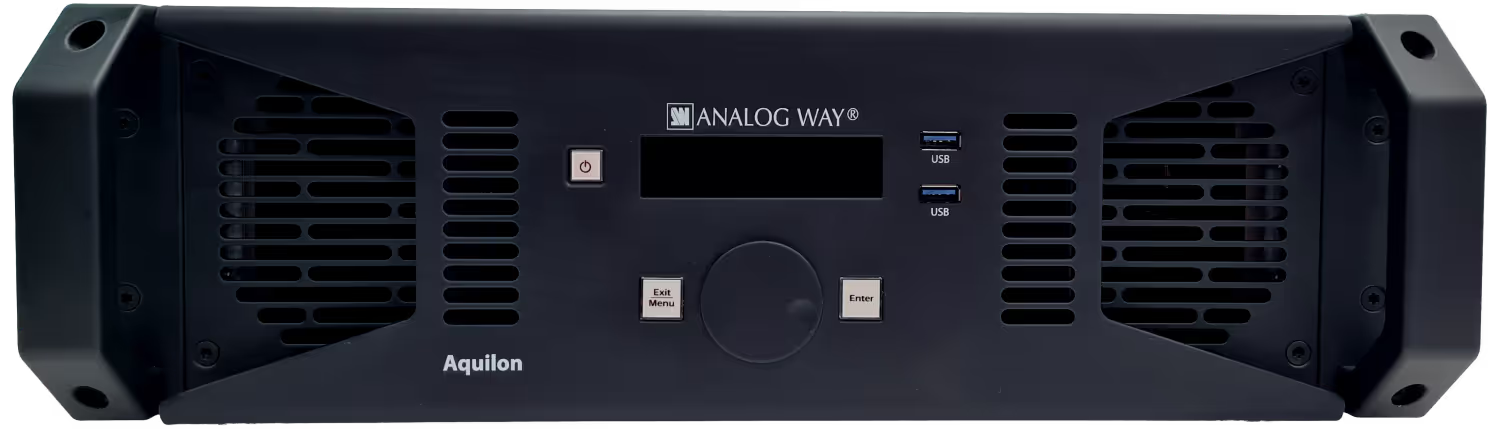
On the show floor in Las Vegas we ran the whole workflow end to end: Aquilon and Aquilon Cmini switchers, Calman generating and loading LUTs live, LiveGrade grading on top, in front of the industry.
Demos ran on Aquilon and the new 3RU Aquilon Cmini: Calman Ultimate profiled the wall, generated 33³ LUTs and wrote them into the switcher slots live over the network; Pomfort LiveGrade drove the correction stage for on-the-spot grading.


The essentials
The whole story, in five facts. The Technical Details view tells the same story in engineering terms.
Book a demo, or bring us your next color-critical spec, we'll scope it and respond with a clear plan.